We’ve all stared at that listing. A beautiful, brick-faced 24-unit apartment building in a growing submarket. The rents are stable, the area is gentrifying, and the math on your spreadsheet says it’s an absolute home run. But then reality hits. You don't have millions of dollars sitting in a checking account. To scale up from single-family houses, you need to learn how to secure a commercial real estate loan. It’s the ultimate growth lever in property investing, but it can feel incredibly intimidating if you’ve only ever dealt with standard residential mortgages.
Transitioning from residential property purchases to larger assets represents a huge milestone. When you buy a house or a duplex, the bank is looking almost entirely at your personal financial health. They want your W-2 tax returns, your credit history, and your debt-to-income ratio. If you fail, they come after your paycheck. But the commercial lending landscape works on entirely different parameters. It requires an operational shift in how you evaluate and present your deals.
In this guide, we are going to unpack the commercial lending process from start to finish. You’ll learn how to qualify, how underwriters analyze commercial real estate assets, and the exact steps to position yourself for competitive loan options. Let's make sure you have the knowledge needed to secure the capital for your next commercial move.
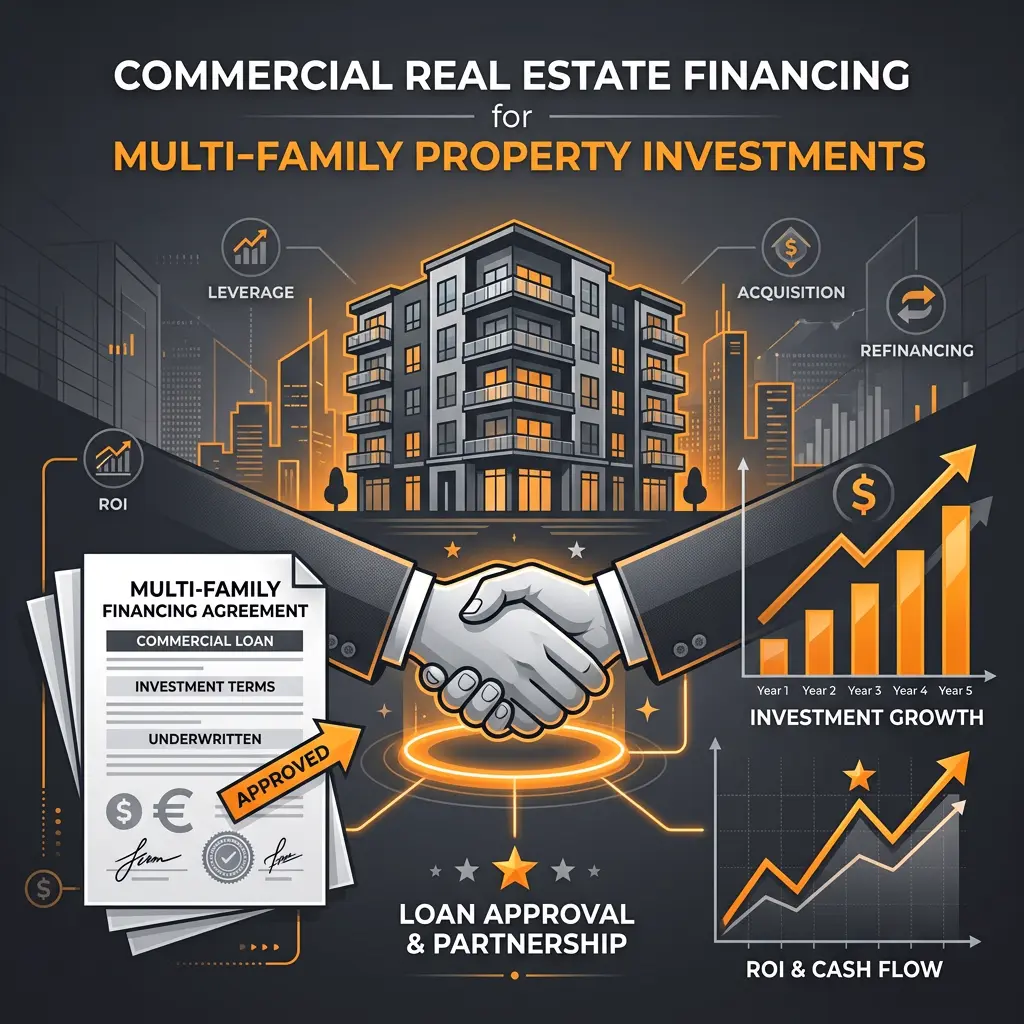
How a Commercial Real Estate Loan Differs from a Residential Mortgage
First, let's establish what a commercial real estate loan actually is and how it differs from a residential mortgage. When you buy a home, the property serves as collateral, but your personal income is the primary source of repayment. If you lose your job, the mortgage is in jeopardy. But in commercial real estate, the property itself is treated like a business. The building's operational income—specifically its Net Operating Income (NOI)—is the primary engine that pays down the debt.
Because of this, when you apply for a commercial real estate loan, the bank focuses heavily on the building's income generation, not just your personal salary. They will request detailed historical rent rolls, utility bills, maintenance logs, and property tax records. They want to ensure the asset is self-sustaining and can comfortably handle the monthly commercial mortgage payments while still leaving a healthy buffer for unexpected capital expenses.
Furthermore, residential loans are typically standardized through government-backed entities like Fannie Mae and Freddie Mac. They come with 30-year fixed terms and simple repayment structures. In contrast, commercial loans are customized, negotiated contracts. They often feature shorter terms (typically 5 to 20 years), amortization schedules over 25 to 30 years, and balloon payments at the end of the term. You need to understand these structures before signing on the dotted line.
Key Underwriting Criteria: What Lenders Look For
When you sit down with a commercial loan underwriting officer, they will analyze three main pillars: the property's financial performance, the local market dynamics, and your personal track record. For instance, if the building has high vacancy, securing a commercial real estate loan becomes significantly harder because the cash flow is deemed unstable.
Lenders use specific metrics to gauge the risk profile of a multi-family property. The two most critical indicators are the Loan-to-Value (LTV) ratio and the Debt Service Coverage Ratio (DSCR). Let's look at how these calculations affect your borrowing power.
1. Loan-to-Value (LTV) Ratio
The LTV represents the percentage of the property's value that the bank is willing to finance. While you can sometimes secure a residential mortgage with as little as 3.5% down, a commercial real estate loan typically requires a larger down payment than a residential loan, usually 20% to 30%. Most commercial lenders cap their LTV at 70% to 75% to protect their investment. This means you need significant liquid reserves to cover the down payment and associated closing costs.
2. Debt Service Coverage Ratio (DSCR)
The debt service coverage ratio (DSCR) is a key metric when applying for a commercial real estate loan. It measures the property's ability to cover its annual debt obligations. The formula is simple: Net Operating Income divided by Total Annual Debt Service. If a property generates $125,000 in NOI and has $100,000 in annual mortgage payments, the DSCR is 1.25.
Lenders evaluating a commercial real estate loan want to see a DSCR of at least 1.25. Anything below 1.20 is generally rejected because it doesn't leave enough breathing room for tenant vacancies, capital repairs, or rising interest rates. If you want a deep dive into how banks calculate this, the financial analysts at Investopedia have an excellent guide on debt service metrics.
Preparing Your Loan Application Package
A major step in preparing for a commercial real estate loan is organizing your financial records. You cannot walk into a commercial bank with a folder of messy spreadsheets and loose receipts. Lenders want to see a professional, comprehensive loan package that demonstrates your competence as an investor.
Most commercial real estate loan packages require tax returns, profit and loss statements, and asset verifications. You will also need to submit a Personal Financial Statement (PFS) outlining your net worth, assets, and liabilities. Even though the property's income is the primary source of repayment, lenders still want to ensure you have enough personal liquidity to handle capital calls or property emergencies.
Before approving a commercial real estate loan, underwriters will audit the property's historical lease rolls. They will examine the length of the current leases, the rent collection history, and the utility billing structures. If the property has a history of high tenant turnover or unpaid rents, the underwriter may adjust the projected vacancy rate upward, which lowers the loan amount you qualify for.
The Importance of Legal Structure and Entities
Many investors establish a business entity like an LLC specifically to hold a commercial real estate loan. Holding commercial properties in your personal name exposes you to immense liability. If a tenant slips and falls at a multi-family complex and sues the landlord, your personal assets could be at risk. Placing the asset and the debt inside an LLC shields your personal wealth.
Additionally, commercial banks prefer lending to entities rather than individuals. It makes the transaction cleaner and ensures that if a partner exits the business, the property and the loan remain intact within the corporate structure. For more information on setting up property entities safely, the risk management resources at the National Association of Realtors (NAR) offer great starting points on corporate structuring for property investors.
Shopping for the Best Commercial Loan Options
It is important to shop around with different lenders to find the best terms for your commercial real estate loan. Don't just settle for the first bank that offers you a term sheet. Different institutions have different appetites for risk and different lending capacities. A local community bank might offer lower interest rates but demand a higher down payment. Conversely, a large regional bank might offer higher leverage but demand stricter covenant requirements.
Understanding how a commercial real estate loan works enables you to scale your real estate business efficiently. By comparing multiple term sheets, you can negotiate better interest rates, lower origination fees, and more flexible prepayment penalties. Remember, even a 0.25% reduction in your interest rate can save you tens of thousands of dollars over the life of a multi-family loan.
Frequently Asked Questions
Q: Can I get a commercial real estate loan with bad personal credit?
A: While the property's cash flow is the most critical factor, lenders still look at your personal credit score. Most commercial banks want to see a credit score of at least 680. If your score is lower, you may still get approved, but you will likely face higher interest rates, lower LTV limits, or be required to provide a strong co-signer.
Q: What is the typical down payment for a commercial multi-family property?
A: You should expect to put down between 20% and 30% of the purchase price. Unlike residential mortgages, commercial loans do not offer low-down-payment options unless you qualify for specialized government programs like an SBA loan (for owner-occupied properties) or an FHA multi-family loan.
Q: How long does the commercial loan underwriting process take?
A: Commercial underwriting is significantly slower than residential processing. It typically takes between 45 and 90 days from the time you submit a completed loan package to the actual closing table. This is because the bank must perform property inspections, commercial appraisals, and environmental reviews.
Q: What is a recourse vs. non-recourse commercial loan?
A: A recourse loan means that if your LLC defaults on the mortgage, the lender can go after your personal assets to cover the remaining balance. A non-recourse loan limits the bank's recovery solely to the property itself. Non-recourse loans are highly desirable but are typically reserved for larger properties (usually over $2 million) and experienced borrowers with strong financials.
Q: Are interest rates higher on commercial real estate loans?
A: Historically, commercial loan rates are slightly higher than residential rates, usually by 0.5% to 1%. However, they can fluctuate widely based on the property type, the LTV ratio, the borrower's experience, and the overall health of the commercial lending market.
Conclusion
In conclusion, securing a commercial real estate loan for a multi-family property requires preparation, solid financials, and patience. By understanding how lenders evaluate Net Operating Income, maintaining healthy personal cash reserves, and presenting a professional application package, you can secure the capital needed to scale your investment portfolio. Take the first step today by analyzing local multi-family listings and connecting with a commercial loan officer to discuss your investment goals.